
Trump Is Here

I write this blog to provide an unfamiliar look into schooling and to offer some ideas that may be useful for teachers, particularly secondary teachers. Writing about politics feels like driving down the wrong side of the road.
Yet as much as I want to focus on curriculum and practice, here and in my classroom, politics intrudes:
This past week, my students’ social media warned that ICE was detaining people in town (Hayward, CA). They weren’t. Later, the Police Department and City issued corrections. Although I suspect those statements were not as widely read as the fearful and/or fear mongering Instagram posts, so asymmetrical are our information sources.
Many of the families we serve are mixed-status; usually the student is born in the United States and one or both of their parents are not and are undocumented. So some of our seniors are worried about filling out the FAFSA (Free Application for Federal Student Aid) as they’re not in a particularly giving-the-federal-government-their-information mood. One of my students, now eighteen, wondered if he could fill it out without listing his parents. He can’t.
Some of my ESL (English as a Second Language) students jokingly asked me if I would miss them when they were deported. “Muy oscuro,” I said.
One of my ESL students asked who I voted for then said that they liked Trump and (correctly) pointed out that Obama deported more people than Trump.
One student, at lunch time, said he was happy Trump was coming because he would burn down the kind of flag that’s in my room: a rainbow.
Trump isn’t inaugurated for five more days, but he’s already here.
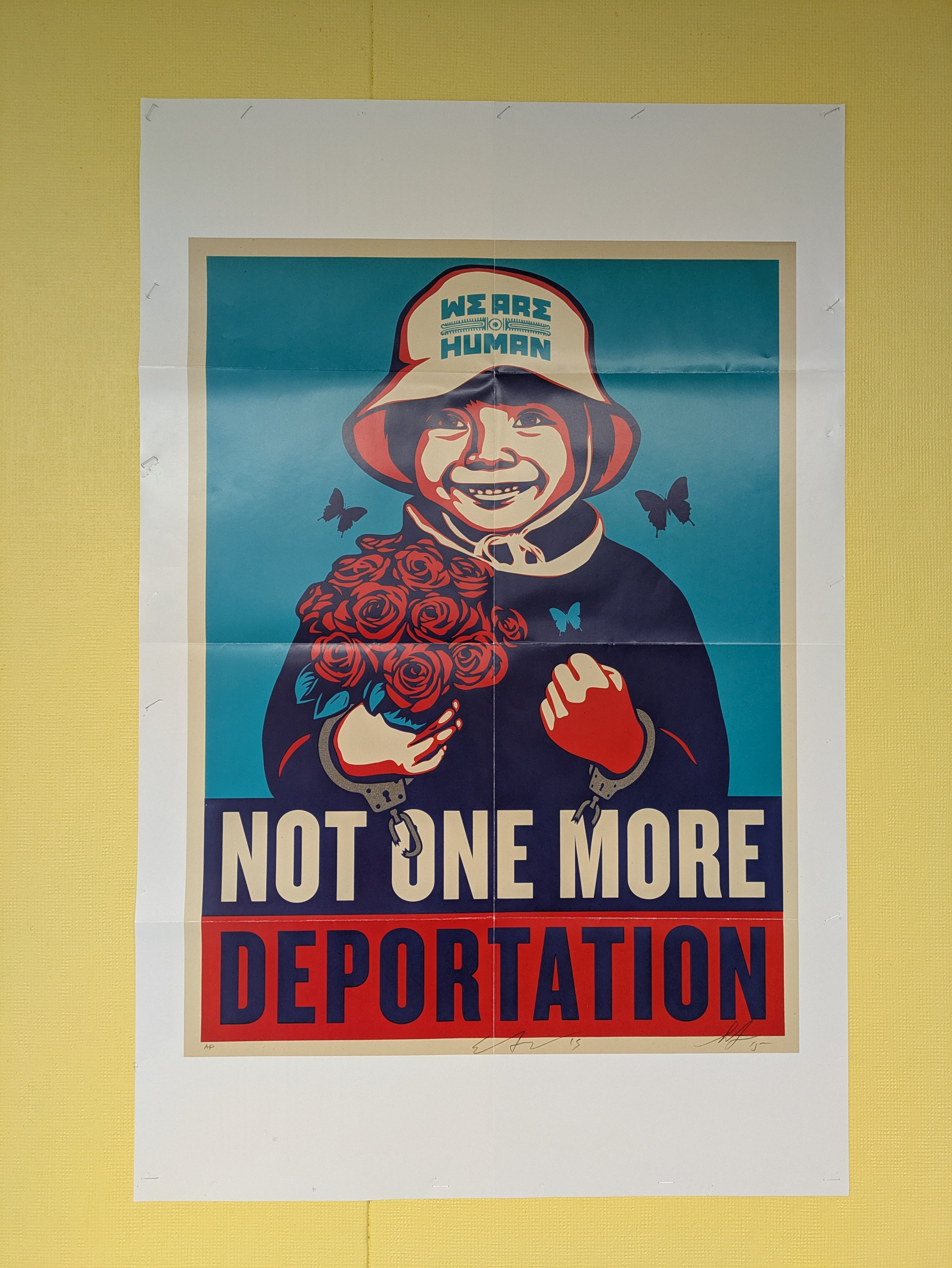
No matter the theatre our classroom operates in - poor/rich, rural/urban, Red/Blue - no matter how much we refrain from airing our political views, we are not neutral, nor can we hide from politics. Certainly our students and their families can’t. There’s over a hundred thousand undocumented students in California alone.
What does it mean to keep our students safe? How do we protect those we serve and do our jobs?
I’m not advocating for the pulpit. But facts may be of some comfort to our students. For example, I reminded my students that historically no President, Republican or Democrat, has used ICE to go into schools or colleges, which are protected under Department of Homeland Security policy. My undocumented students have rights, including the right to school.
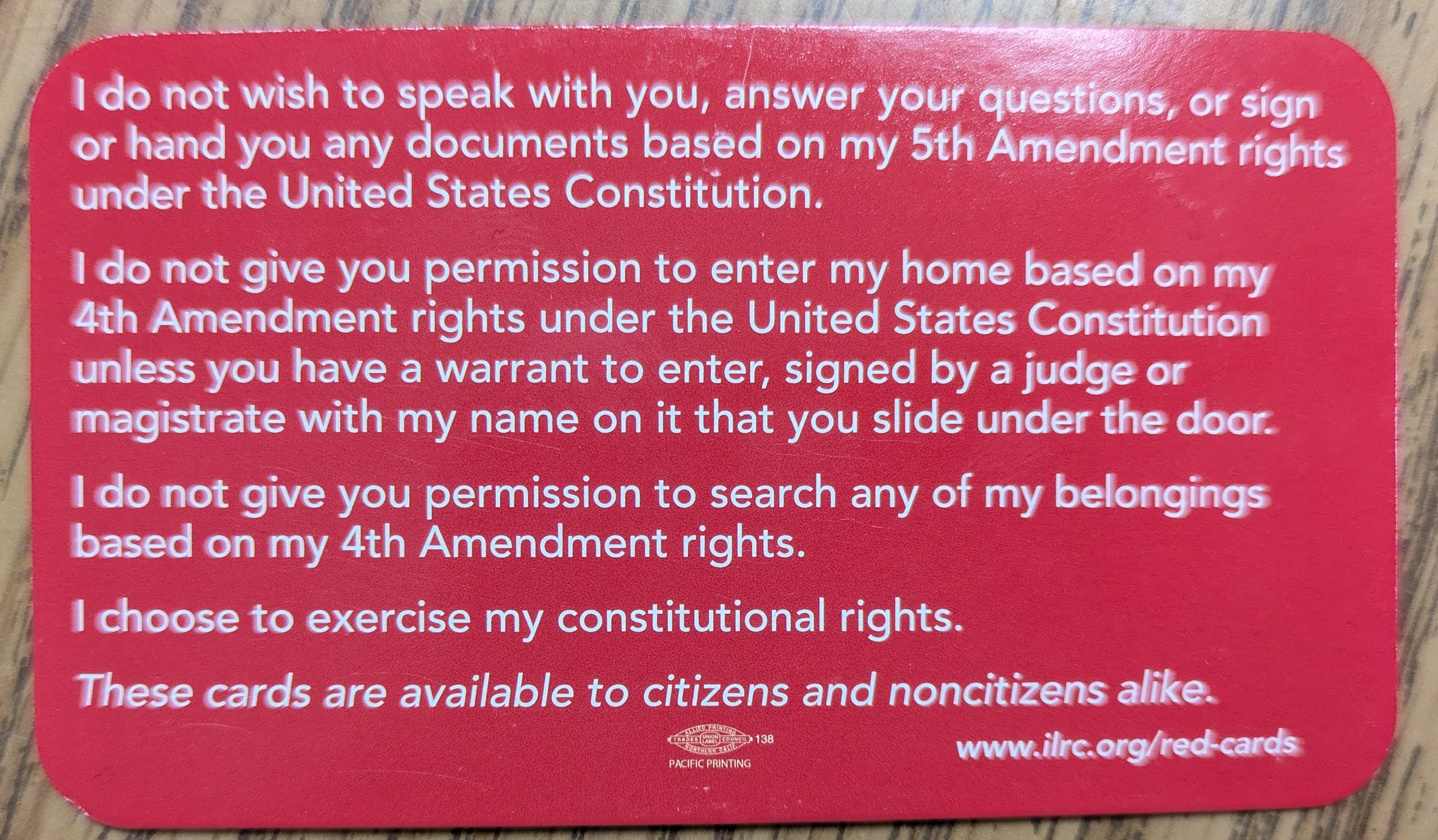
NOTE: Since writing this blog, Trump, by executive order, rescinded that policy, so now ICE may enter safe spaces like hospitals, places of worships and churches. We now give our students red cards, so that they may be aware of their rights and defend them, if needed.
What political discourse from students do we brook? How do we accommodate the strange and sometimes dangerous rhetoric from the President of the United States?
I remember teaching online January 6th, 2021, and explaining to my ESL students that what we were seeing on the news was not what was supposed to be happening. I found myself repeating, “This is not normal.”
The professorial answer is to let the students talk - reinforce the democratic ideal of civil discourse with some sharing strategy. Fair enough. But students also need to be informed and have set norms.
(One of my favorite moves to strengthen listening: in a pair share, have Student A share some thing they like for a minute as Student B listens. Then take all A’s out of the room and tell them not to pay attention when it’s B’s turn. Next, give Student B a turn to talk about something they love. Watch as most of the B’s stop sharing as A’s look away and turn their back. Finally, process how it felt, for both parties: those told not to listen and those who weren’t listened to.)
The questions will continue, perhaps with greater urgency. Now and later, I’ll have some ideas but no answers.
In Conclave Robert Harris wrote, “Certainty is the deadly enemy of tolerance.” So let us begin the second Trump presidency with a great uncertainty.
"One of my students, now eighteen, wondered if he could fill it out without listing his parents. He can’t."
He might be able to. He should talk to a college financial aid advisor to find out if he meets the criteria to qualify as an independent student. It's a strict criteria and he would need documentation every year, but it IS possible for students under 23 to qualify.
Powerful